


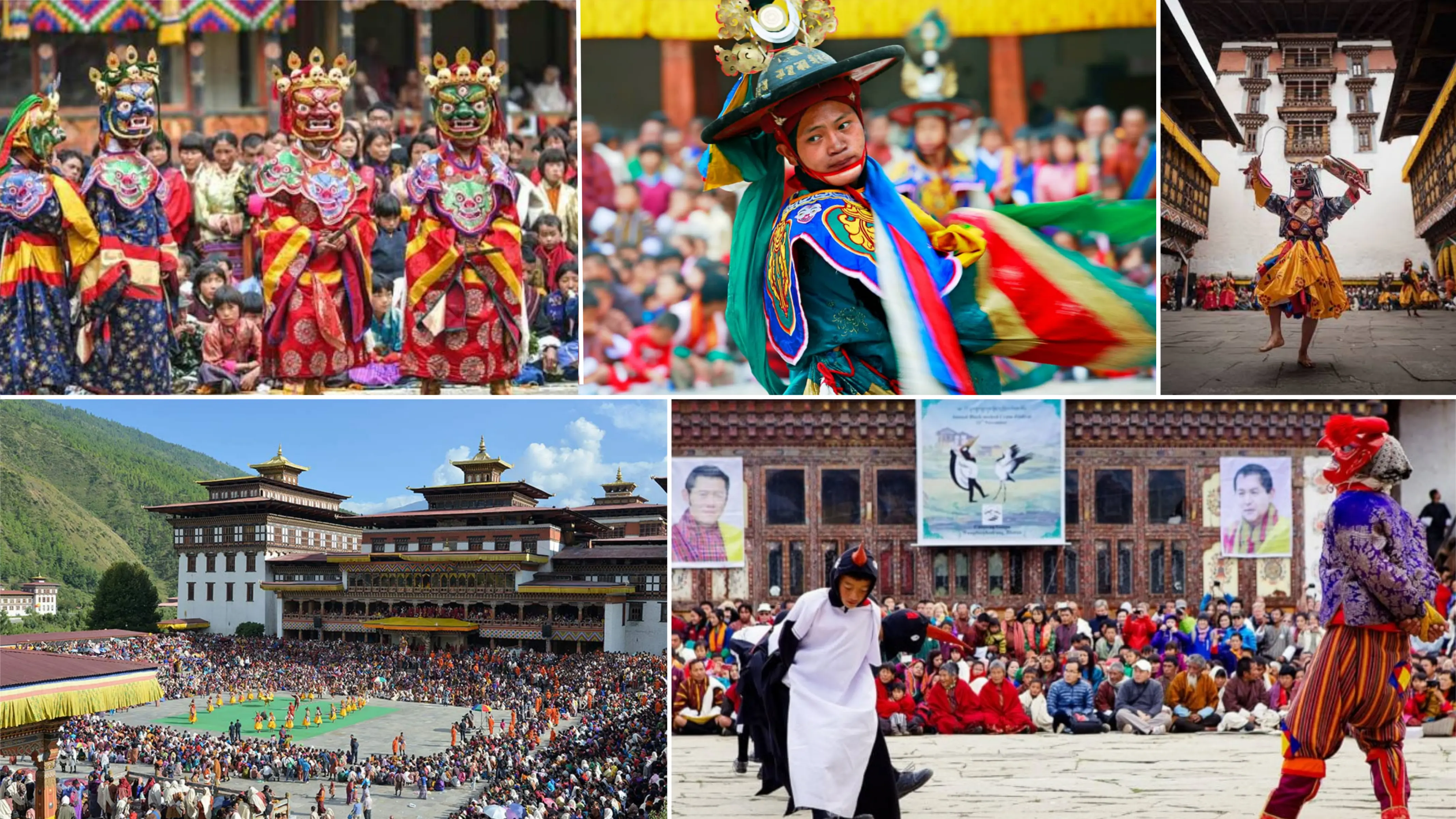
What Is a Bhutanese Tshechu and Why Is It So Important?
A Bhutanese tshechu is one of the most spectacular religious
festivals in Bhutan; also, the word tshechu means “the tenth day”. It is
celebrated in monasteries, dzongs (fortresses), and temples in Bhutan every year
on the tenth day of the tenth month in honor of Guru Rinpoche, or
Padmasambhava, an ancient sage who brought Buddhism to Bhutan. Colorful masked
dances and music play a significant role in the celebrations. However, the
event is much bigger than just a show or folk art, as people from different
parts of Bhutan gather to get blessed and seek spiritual development. This
festival allows them to preserve their ancient beliefs and rituals that have
been passed down from generation to generation and continue to influence the
lives of Bhutanese people.
Apart from the religious importance, a Tshechu is also a
social event, during which families, friends, and even entire villages can come
together. People often come from far-away places, dressed in their traditional
costumes, to experience the prayers, watch the masked dances, and see their
loved ones. Every dance has a meaning, telling the story of the struggle
between good and evil, and ultimately, the victory of good. Moreover, by
visiting a Tshechu, one can get a chance to see Bhutan’s living heritage,
instead of looking at it from the past through historical glasses. Therefore,
it really makes a difference in the perception of Bhutanese culture, which in
turn helps foster respect and sincerity toward the country and its ancient
traditions.
Understanding the Cultural and Spiritual Meaning Behind the
Festival
A Bhutanese Tshechu is a holy festival, which is closely tied
to the spiritual beliefs of Bhutanese people. It plays an important role in
their lives, helping them to remember and reinforce Buddhist teachings through
various rituals and ceremonies. All the aspects of this cultural event are full
of symbolism that is related to Vajrayana Buddhism. Masks, dances, prayers, and
performances retell the old legends about great Bodhisattvas and express the
key moral values and ideas of Buddhism. It is believed that masked dances help
to achieve spiritual improvement through faith and devotion to the religion.
Therefore, people who attend this event and watch the spectacular performance
of monks and laymen dancers feel that they purify their souls and contribute to
their spiritual progress. This is why a tshechu is a sacred ceremony, which is
characterized by a solemn atmosphere, despite its bright colors and enthusiastic
participants.
The festival is also significant because it helps pass on
Bhutan’s cultural heritage from one generation to the next. Family members
attend the festival together, and children learn about their cultural
traditions and heritage from their elders, who tell them about the festival’s
meaning and symbolism. Additionally, people who have not had the opportunity to
explore Bhutan’s cultural heritage learn about it at the festival by observing
the locals who celebrate their unique cultural identity. While many festivals
today are primarily entertainment, a Tshechu is a religious ceremony that
embodies the core values that Bhutanese people believe in. As such, people who
attend the festival understand and respect its underlying spirit and purpose.
By doing so, they ensure that this time-honored Bhutanese tradition continues
to thrive and that the country’s cultural heritage is passed on and upheld for
generations. People who visit Bhutan and take part in the festival can view the
dance as an authentic display of devotion that is at the heart of Bhutan’s
cultural heritage. It unites people in their religious beliefs, passing on
ancient traditions and customs that have been performed for centuries.
Tshechu Etiquette: What to Do and What to Avoid
Attending a Bhutanese Tshechu is an incredible opportunity to
experience the country’s spiritual traditions. At the same time, it is critical
to respect the local culture and etiquette to avoid offending any community
members and to express your gratitude for the warm welcome. This guide aims to
provide recommendations on etiquette when attending a Bhutanese Tshechu. By
understanding and embracing the local culture, you will become a
well-intentioned visitor and be able to enjoy the event while honoring its religious
significance. Below are some of the recommended etiquette tips:
·
Follow the guidance of monks, festival
officials, and local attendees at all times.
·
We suggest you dress modestly and wear clothing
that covers your shoulders and knees. It is not mandatory, but traditional
attire is appreciated if you have access to it.
·
Arrive early to find a suitable viewing spot
without disturbing ongoing ceremonies.
·
Keep your voice low and maintain a respectful
attitude during prayers and sacred dances.
·
Ask for permission before photographing monks,
performers, or local people, especially during religious rituals.
·
Observe how locals behave and follow their
example if you are unsure about proper etiquette.
·
Switch your phone to silent mode to avoid
interrupting ceremonies.
·
Dispose of litter responsibly and help keep the
festival grounds clean.
·
Show patience and courtesy in crowded areas,
allowing elders and monks to move freely.
·
Participate with genuine curiosity and respect
rather than treating the festival as a tourist attraction.
Even small actions can unintentionally offend local customs
during a Tshechu. Avoiding disrespectful behavior demonstrates cultural
awareness and helps preserve the peaceful, spiritual atmosphere of the festival
for everyone attending.
·
Do not interrupt prayers, rituals, or sacred
dances by walking across performance areas.
·
Avoid wearing revealing, flashy, or
inappropriate clothing.
·
Never touch religious objects, masks, or
ceremonial items unless invited.
·
Do not point your feet toward monks, shrines, or
sacred objects while sitting.
·
Avoid loud conversations, shouting, or
disruptive behavior during ceremonies.
·
Never use flash photography if it has been
restricted by festival organizers.
·
Do not climb onto religious structures or
restricted areas for better views.
·
Avoid consuming alcohol or behaving intoxicated
at the festival.
·
Do not pressure locals for photos or interrupt
their prayers for conversations.
·
Never treat sacred performances as entertainment
alone; remember their deep religious significance.
How to Interact Respectfully with Locals, Monks, and
Performers
One of the most rewarding aspects of attending a Bhutanese
Tshechu is that it is an incredible cultural experience that involves all
people involved. This means that when you are visiting a Tshechu, you should
treat the local people, monks, dancers, and others who make the festival
possible with respect. By doing so, you are likely to have more fulfilling
interactions and experiences. After all, the local community and the Buddhist
monks that host the festival are sacred figures during the event, not just
performers for your entertainment. Therefore, you must remain humble, patient,
and respectful to fully engage with this cultural and religious activity, and
to make sure you do not offend the local people and their way of life.
·
Greet locals politely with a smile and a
respectful attitude, even if you don't speak the local language.
·
Allow monks to initiate conversations when
appropriate, and speak calmly and respectfully if approached.
·
Avoid interrupting monks while they are praying,
meditating, or participating in religious ceremonies.
·
Ask for permission before taking close-up photos
of monks, performers, or local families.
·
Be patient if someone declines a photo request,
and always respect their decision.
·
Maintain a respectful distance from performers
before, during, and immediately after sacred dances.
·
Avoid touching performers' masks, costumes, or
ceremonial items, as many have religious significance.
·
Listen more than you speak, and show genuine
interest when locals share stories or explain traditions.
·
Respect personal space and avoid overly familiar
gestures, especially with monks and elders.
·
Thank people sincerely if they offer guidance,
answer questions, or share insights about the festival.
·
Support local artisans and vendors respectfully
by purchasing authentic handmade products when possible.
Note: Remember that kindness, humility, and cultural
sensitivity often leave a more positive impression than extensive knowledge about
Bhutan.
How to Experience a Tshechu Beyond the Performances
While the sacred masked dances are the main attraction of any
Bhutanese Tshechu, they are only one aspect of this unique festival. It is well
worth attending Tshechu not only to see the traditional dances and ceremonies,
but also to appreciate the opportunity to pray and learn about Bhutanese
culture. You'll get much more out of attending this festival than just pictures
and postcard views. If you want to truly experience Bhutan, take the time to
appreciate the subtle details of everyday life at Tshechu. Your insights will
be more meaningful, and the memories will last a lifetime.
·
Observe the spiritual rituals taking place
around the festival grounds, including prayers, blessings, and offerings, to
better understand the religious purpose of the celebration.
·
Spend time watching how local families
participate in the festival. Their interactions, traditions, and shared moments
often reveal as much about Bhutanese culture as the performances themselves.
·
Visit nearby monasteries, temples, or dzongs
before or after the festival to learn about the history and spiritual
significance of the location hosting the Tshechu.
·
Take time to appreciate the intricate details of
the dancers' costumes, handcrafted masks, and ceremonial accessories, many of
which have been preserved through generations of skilled artisans.
·
Explore local food stalls and try authentic
Bhutanese dishes and snacks. Sampling regional flavors is an excellent way to
experience the country's culinary traditions alongside its cultural heritage.
·
Support local artisans by purchasing handmade
textiles, traditional crafts, or locally produced souvenirs instead of
mass-produced items. Your purchases help preserve traditional craftsmanship and
support local livelihoods.
·
Observe traditional Bhutanese clothing worn by
attendees, such as the Gho and Kira, and learn how these garments reflect the
country's cultural identity and customs.
·
Engage in respectful conversations with
residents, guides, or festival volunteers if the opportunity arises. Many are
happy to share stories, explain customs, or discuss the significance of the
festival.
·
Spend quiet moments simply observing the
atmosphere. Watching families reunite, elders offer prayers, and children
experience the festival can provide meaningful insights into Bhutanese
community life.
·
Stay until the festival begins to wind down if
your schedule allows. The closing moments often reveal a calmer, more intimate
side of the celebration that many visitors miss by leaving immediately after
the main performances.
·
Reflect on what you've learned after the
festival rather than treating it as just another sightseeing stop.
Understanding the beliefs, traditions, and community spirit behind a Tshechu
often becomes the most memorable part of the entire experience.
Final Tips for Being a Respectful Guest in Bhutan
It is not only a chance to see beautiful dances and take
pictures in front of gorgeous scenery, but also an opportunity to participate
in a centuries-old spiritual tradition that is sacred to the local Bhutanese
people. It is essential to remember that by dressing up, talking, and acting a
certain way, you contribute to the preservation of Bhutan’s centuries-old
beliefs. Moreover, being a good guest helps avoid various cultural faux pas and
allows one to experience more positive emotions during the event. Thus, it is
important to be considerate to people and respect their beliefs.
·
Learn a little about Bhutanese customs and
Buddhist traditions before attending the festival to better understand its
significance.
·
Dress modestly and choose clothing that is
appropriate for a religious and cultural event.
·
Arrive with patience, as festival schedules may
be flexible and large crowds are common.
·
Follow local etiquette by observing how
Bhutanese attendees behave and respecting their example.
·
Keep noise to a minimum and maintain a calm,
respectful presence throughout the event.
·
Always ask for permission before taking close-up
photographs of individuals or sacred ceremonies.
·
Respect restricted areas, monastery rules, and
any instructions given by festival organizers.
·
Support local communities by purchasing
authentic handicrafts and enjoying locally prepared food.
·
Leave no trace by disposing of waste responsibly
and helping keep the festival grounds clean.
·
Stay curious, listen carefully, and appreciate
the festival as a living spiritual tradition rather than simply a tourist
attraction.
·
Thank your hosts, guides, or anyone who shares
their knowledge, as small gestures of gratitude are always appreciated.
·
Carry the same respect beyond the festival by
honoring Bhutanese customs throughout your journey in the country.


Commentaires
post comment